
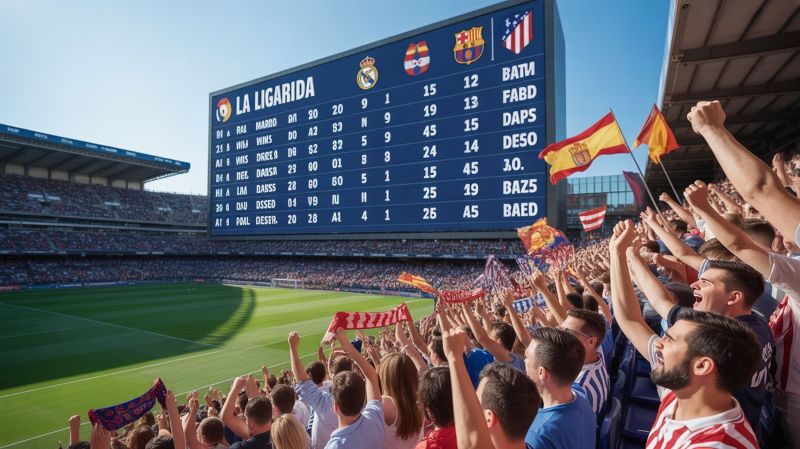
Spanish football is known for passion, rivalry, and world-class teams—and the Spanish La Liga standings represent the heartbeat of each season.
Fans check the table weekly to see who’s leading the race for the championship, who’s climbing, and who’s dangerously close to relegation.
The standings don’t just show rankings; they reflect performance, consistency, and tactical evolution throughout the season.
Whether you’re a die-hard fan, a bettor, a fantasy football player, or a blogger covering sports trends, understanding La Liga standings gives you a clear picture of the league’s competitive landscape.
How La Liga Standings Are Calculated
The La Liga table system follows a standard points format, but understanding the rules helps explain why teams shift rapidly across positions:
Points Structure
- Win: 3 points
- Draw: 1 point
- Loss: 0 points
Simple, but extremely influential when competition is tight.
Tie-Breaker Rules
When two or more teams have equal points, La Liga uses:
- Head-to-head results
- Head-to-head goal difference
- Overall goal difference (GD)
- Total goals scored
These rules play a major role—sometimes a team can move up multiple places even if points are equal.
Impact of Goal Difference
A strong goal difference not only helps during tie-breaks but also indicates how dominant or weak a team has been in both attack and defense.
Current Spanish La Liga Standings (Updated Overview)

At this stage of the season, the current La Liga standings often reflect three key clusters:
Title Contenders
These are the teams consistently at the top—usually:
- Real Madrid
- Barcelona
- Atlético Madrid
They maintain higher possession stats, strong conversion percentages, and deeper squads.
European Qualification Spots
Positions for:
- UEFA Champions League
- Europa League
- Conference League
Mid-level clubs like Real Sociedad, Athletic Bilbao, Real Betis, and Villarreal often fight fiercely here.
Bottom and Relegation Zone
Teams at positions 18–20 are at highest risk. Newly promoted clubs sometimes struggle due to squad depth and experience gaps.
Top Teams Competing for the Title
Every season, the battle at the top is intense. Here’s a deeper look:
Real Madrid’s Consistency
Known for defensive strength and late-game heroics, Madrid often leads based on squad depth and elite finishing.
Barcelona’s Possession Philosophy
Barça’s rankings are heavily influenced by tactical rebuilds, possession dominance, and youth academy talent rising into the first team.
Atlético Madrid’s Discipline
Under Diego Simeone, Atleti maintain a structured defensive style that keeps them near the top of the table consistently.
Mid-Table Analysis: Teams Fighting for Stability
The mid-table is where the real unpredictability lies.
Teams like Getafe, Valencia, Osasuna, Las Palmas, and Rayo Vallecano may not chase titles but aim for consistency and survival. Their standings fluctuate weekly due to narrow victories or tight draws.
Why Mid-Table Matters
- Determines final league revenue placement
- Impacts player transfers
- Helps clubs plan next season’s strategy
- Shows which teams are improving long-term
Relegation Zone Breakdown: Who Is at Risk?
The relegation battle is one of the most dramatic parts of the La Liga season.
Factors That Push Teams into Relegation
- Weak away performance
- Lack of squad rotation
- Injuries to key players
- Low scoring efficiency
Psychological Pressure
Teams at the bottom often play under immense pressure, affecting confidence and match outcomes.
Points System and Tie-Breaker Rules in La Liga
Revisiting the rule system helps fans interpret weekly table shifts.
Why Tie-Breakers Matter
A team could win or lose a European qualification spot solely based on goal difference or head-to-head performance.
Final-Day Scenarios
La Liga is famous for last-week dramas where:
- Two teams tie on points
- A Champions League spot is at risk
- A relegation battle depends on one goal
Historical Spanish La Liga Standings: Past Season Comparisons
Looking at past Spanish La Liga standings reveals interesting patterns over the years:
Dominance of Big Clubs
Clubs like Real Madrid and Barcelona have historically dominated the Spanish La Liga standings, winning most of the league titles and consistently appearing at the top of the table.
Rise of Underdogs
Occasional surprises—such as Deportivo La Coruña, Valencia, or Sevilla—show that smaller clubs can climb the Spanish La Liga standings with strong tactics and consistent performance.
Defensive vs Offensive Styles
Different eras in La Liga highlight how tactical preferences impact the Spanish La Liga standings:
- 2000s → defensive stability
- 2010s → high-possession dominance
- 2020s → balanced tactical approaches
Key Factors Influencing Spanish La Liga Standings Throughout the Season
Many variables impact the Spanish La Liga standings beyond simple wins.
Squad Depth
Teams with strong benches survive intense fixture schedules, maintaining high positions in the Spanish La Liga standings.
Injuries
Loss of key attackers or defenders can trigger significant drops in the Spanish La Liga standings.
Managerial Changes
Mid-season coaching adjustments often shift form, affecting Spanish La Liga standings:
- Tactical realignment
- Boosted team confidence
- Restructured formations
Spanish La Liga Standings Predictions & Expert Insights
While predictions are never final, trends help forecast outcomes in the Spanish La Liga standings.
Title Race Outlook
Teams with strong attacking numbers and stable defenses tend to finish in the top three of the Spanish La Liga standings.
Potential Surprises
Clubs with young talent and high pressing styles can jump unexpectedly into European spots in the Spanish La Liga standings.
Relegation Forecast
Teams with low goal conversion rates and poor away form remain at high risk at the bottom of the Spanish La Liga standings.
Where to Check Real-Time Spanish La Liga Standings Online
Reliable sources for updated Spanish La Liga standings include:
- Official La Liga website
- Football statistics platforms
- Live score apps
- Sports news websites
Look for platforms offering:
- Real-time Spanish La Liga standings updates
- Match insights
- Home/away stats
- Player performance analytics
Final Thoughts
The Spanish La Liga standings are more than just numbers—they represent strategy, form, momentum, and the unpredictable magic of football.
Following the table weekly helps fans understand team dynamics, performance shifts, and long-term progression. As the season unfolds, every goal, victory, or loss can alter the standings dramatically.
Whether you’re analyzing the title race or tracking relegation battles, staying updated ensures you never miss a moment of La Liga excitement.
FAQs
1. How often are Spanish La Liga standings updated?
Spanish La Liga standings are updated after every match, giving fans real-time access to the latest La Liga table and rankings.
2. What determines team ranking when clubs have equal points?
If two teams tie on points, La Liga uses head-to-head results, followed by goal difference and total goals scored to decide the final ranking.
3. Which teams regularly finish at the top of the La Liga table?
Clubs like Real Madrid, FC Barcelona, and Atlético Madrid consistently appear in the top positions of the La Liga standings due to strong squads and stable performance.
4. How many teams get relegated from La Liga each season?
Every season, the bottom three teams in the La Liga standings are relegated to the Segunda División.
5. Where can fans check live and updated La Liga standings?
Fans can view real-time La Liga standings today on the official La Liga website, major sports apps, and trusted platforms offering live football scores.
Related post:
- Black Mold In Microwave – Easy Steps To Clean It Fast!
- Can A Microwave Be Plugged Into A Surge Protector – Don’t Risk Fire!
- Breaker Size For Microwave – Simple Rules For A Safer Kitchen!