
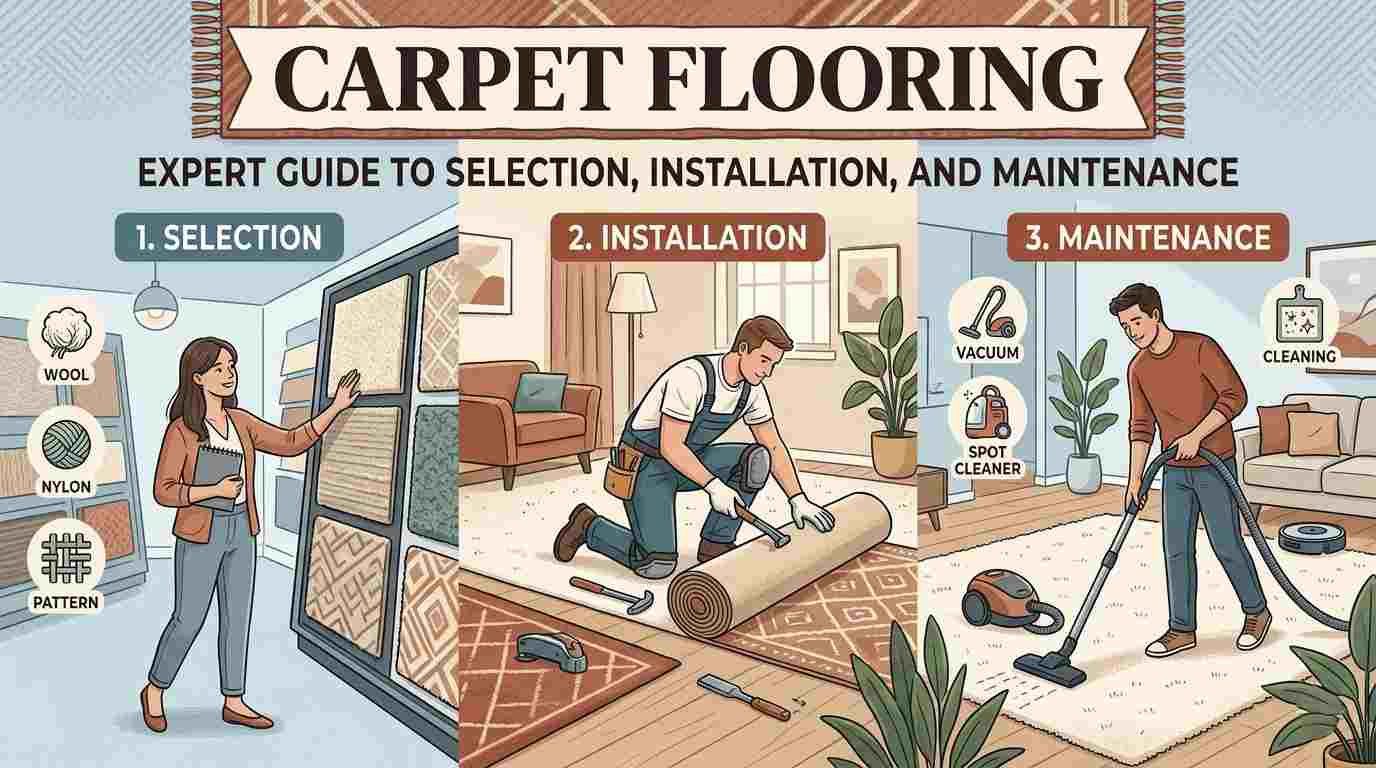
Carpet can transform your space by adding warmth, comfort, and sound control while fitting a wide range of budgets and styles. If you want a soft, durable floor that’s easy to customize—by fiber, pile, and color—carpet often offers the best balance of comfort, cost, and maintenance for bedrooms, living areas, and basements.
You’ll explore which carpet flooring materials suit your lifestyle, how different installation methods affect appearance and longevity, and simple care steps that keep your floors looking new. This guide helps you pick the right carpet and understand what to expect from purchase through installation and ongoing upkeep.
Types of Carpet Materials
You’ll find materials that prioritize durability, stain performance, natural comfort, or a balance of those traits. Each option below lists typical benefits, maintenance needs, and where the material performs best so you can match it to your room’s use and traffic.
Nylon
Nylon excels where foot traffic and resilience matter most. It resists crushing and matting, so it’s a strong choice for hallways, living rooms, and stairs. Look for higher denier and twist levels for improved longevity.
Nylon accepts dyes well, so you get consistent, fade-resistant color options. It requires regular vacuuming and occasional professional cleaning to remove embedded dirt and restore pile; spot-treat spills quickly with a mild cleaner designed for synthetic fibers.
Expect mid-to-high price points depending on construction. If you have pets, choose stain-resistant or solution-dyed nylon to reduce odor and urine damage.
Polyester
Polyester offers excellent color clarity and soft hand at a generally lower cost than nylon. Solution-dyed polyester provides strong stain resistance and UV stability, making it a good pick for sunlight-exposed rooms and color-focused designs.
Its downside is lower resilience under heavy traffic; polyester can show wear and crush marks sooner than nylon. You should vacuum frequently and rotate furniture to avoid permanent pile flattening.
Polyester is inherently hydrophobic, so spills bead on the surface—clean quickly to avoid staining. Budget-friendly options suit bedrooms and low-traffic living areas where softness and color are priorities.
Wool
Wool is a natural fiber prized for warmth, resilience, and flame resistance without chemical treatments. It retains loft and spring, which helps maintain appearance in medium-traffic spaces like bedrooms and formal living rooms.
You’ll pay a premium for wool, but you also get superior natural insulation, sound dampening, and a longer lifecycle when cared for properly. Wool absorbs moisture and can attract stains, so stain-protective treatments and prompt cleaning are important.
Professional cleaning is recommended periodically because wool fibers can felt or shrink with improper home cleaning. If you need hypoallergenic or pet-resistant choices, note that wool can trap allergens and may not suit households with severe allergies.
Triexta
Triexta (a subclass of polyester often marketed under trade names) combines polyester-like softness with improved resilience and inherent stain resistance. It resists oil- and water-based stains without requiring heavy chemical treatments.
Triexta recovers well from foot traffic, so it’s suitable for family rooms, play areas, and some high-traffic zones. It offers good softness underfoot and maintains color over time thanks to solution-dyeing in many products.
Care is simple: routine vacuuming and prompt spot cleaning usually suffice. Expect mid-range pricing; compare fiber warranties and pile construction to ensure the Triexta carpet you choose matches your durability expectations.
Installation Methods and Care
You’ll learn practical choices for laying carpet, what to expect from professional installers, and the routine steps that keep fibers performing and looking their best. Focus on correct prep, the right tools, and a simple maintenance schedule to protect your investment.
Carpet Tile vs Broadloom
Carpet tile installs as 18″–24″ modular squares you adhere or float over subfloor; they allow pattern mixing and easy replacement of damaged sections. Tiles often use peel-and-stick or pressure-sensitive adhesive and require a level subfloor within 1/8″ over 6 feet to avoid telegraphing seams.
Broadloom comes in rolls (typically 12′ or 15′ widths) and is stretched wall-to-wall using tack strips and power stretchers for a flat, seamless appearance. Choose broadloom when you want continuous pattern and lower seam count; choose tiles for high-traffic zones, stairs, or when minimizing downtime during repairs.
Consider pad compatibility: tiles often accept thinner, denser pads or integrated backings, while broadloom needs a uniform pad laid on the entire floor with edge trimming at tack strips. Weigh replacement cost and installation complexity when deciding between the two.
Professional Installation Process
A carpet flooring expert begins by measuring for waste, ordering 5–15% more material for seams and pattern repeat, and inspecting the subfloor for moisture, level, and cleanliness. They remove baseboards if needed, install or repair tack strips, and lay a recommended pad, usually 6–8 lb density for residential broadloom.
For broadloom, installers seam with hot-melt seaming tape, trim with a carpet knife, and use a power stretcher to remove wrinkles and prevent premature wear. For tiles, they verify layout lines, acclimate tiles 24–48 hours if adhesive is sensitive, and apply adhesive per manufacturer instructions.
Final steps include trimming at doorways, reinstalling trim, and a walk-through to identify points for future care. Ask for manufacturer warranty registration and a written note of pad type and seam locations so you can maintain warranty coverage.
Routine Maintenance
Vacuum high-traffic areas at least twice weekly with a rotating brush machine; vacuum whole rooms once weekly. Immediate blotting of liquid spills prevents set-in stains; use a mild detergent solution and a white cloth to avoid dye transfer.
Schedule professional hot-water extraction every 12–18 months for residential use, more often for pets or heavy traffic. Rotate furniture and use coasters under heavy legs to prevent indentation; lift and groom pile with a brush to restore appearance after cleaning.
Use entry mats to trap grit and establish a no-shoes policy where practical. Keep humidity between 30–50% to reduce static and fiber stress, and replace pads when you replace the carpet to ensure consistent support and longevity.